

Sustainability and innovation guide how we deliver infrastructure for communities, today and into the future.
By adopting smarter construction methods, low carbon solutions and emerging technologies, we reduce emissions, improve resource efficiency and protect natural environments. This approach ensures our projects create enduring value for people, places and the communities they support.

At Fletcher Construction we're right at the cutting edge of innovation.
At Fletcher Construction we're right at the cutting edge of innovation. Our Engineering Services team's digital skills give our teams - and our clients - a mind-blowing amount of information about projects of all sizes. Take a look at this video to see what they're capable of.

Our digital engineering capabilities offer a lot of benefits to our customers.
Our digital engineering capabilities offer a lot of benefits to our customers. One of them is cost savings.
We delivered a new wastewater treatment plant at Snells Beach for Watercare, who said that our suite of digital tools helped to streamline the project, and therefore save a substantial amount of money.

BPC achieved a 62% carbon reduction during Early Contractor Involvement (ECI) on the Whakawhirinaki Silverstream Pipe Bridge.
BPC achieved a 62% carbon reduction during Early Contractor Involvement (ECI) on the Whakawhirinaki Silverstream Pipe Bridge.
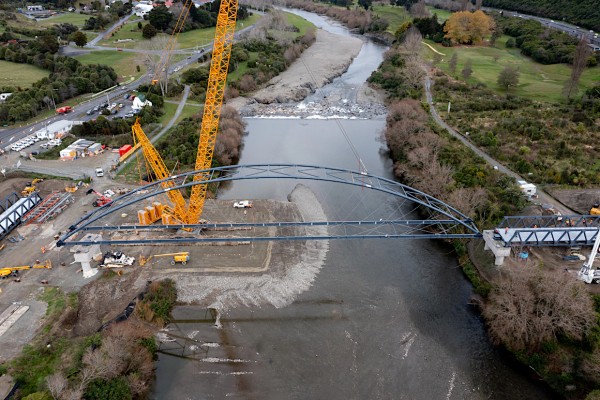
The Whakawhirinaki Silverstream Pipe Bridge carries a critical new drinking water pipeline, along with a shared path for cyclists and pedestrians, across Te Awa Kairangi / Hutt River.
Through the ECI phase, BPC worked closely with designers to identify opportunities to reduce carbon early in the project. A key change was reducing the weight of the superstructure by replacing a concrete deck with a lighter steel deck. This also enabled a reduction in the supporting substructure, requiring fewer piles and less steel overall.
Environmental impacts were further reduced by eliminating the need for piling within the river. The team also introduced geogrid reinforcement in the embankment. Instead of importing the full volume of material from a quarry, only the structural core was brought in, with reinforced layers built around it. Undercut material from site was then reused on the outer batters to achieve the required design profile. This approach reduced quarry imports and removed the need to send surplus material to landfill.
This project demonstrates the benefits of applying PAS 2080 principles, with significant carbon savings achieved through early collaboration between the owner, designer, constructor and suppliers.
Throughout construction, the team tracked and reported on carbon emissions, including Scope 3 emissions from materials. This allowed them to measure performance, build understanding and share insights with the wider industry.
Scope 3 emissions from material manufacture and transport accounted for 94% of total project emissions. Within this, material manufacture (A1–A3) was dominated by steel (88%), followed by concrete (10%) and aggregates (2%).
Transport-related emissions (A4) were largely driven by the international shipping of steel (79%), with the remaining contributions coming from the transport of aggregates (11%), steel (8%) and concrete (2%) by road.
Water New Zealand has recognised BPC’s work in its Embodied Carbon Guideline as an example of industry best practice.

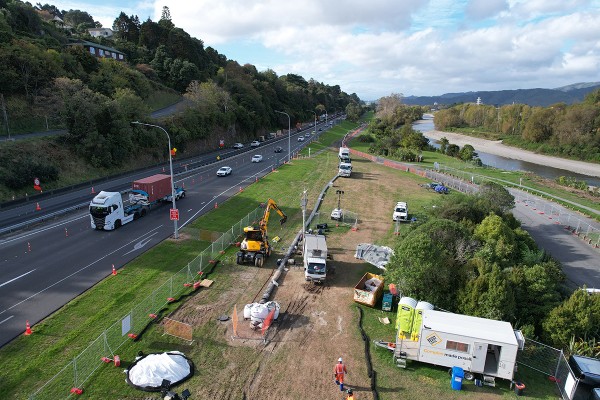
BPC's PipeWorks used 400mm diameter thermoplastic polyurethane (TPU) hose as a bypass solution to support trenchless pipelining in the Western Hills area of Lower Hutt.
BPC's PipeWorks used 400mm diameter thermoplastic polyurethane (TPU) hose as a bypass solution to support trenchless pipelining in the Western Hills area of Lower Hutt.
Adapting technology from the oil and gas sector, the team delivered a more agile and reliable bypass system that saved time, labour and cost.
CCTV inspections had identified a 589m section of a critical trunk sewer beneath State Highway 2 (SH2) that was at risk of structural failure. Carrying around 300 litres per second of wastewater, this is vital regional infrastructure. To minimise disruption, Wellington Water limited the work to just two weeks during the Easter school holidays, requiring an innovative solution that avoided closing the highway.
PipeWorks implemented a trenchless rehabilitation approach using an ultraviolet (UV) cured-in-place pipe liner. This flexible liner was installed within the existing sewer and hardened in place using UV light, removing the need for major excavation. A total of 589m of sewer main, including 825mm and 675mm diameter sections, was successfully relined beneath SH2.
At the same time, a robust bypass system was needed to keep flows moving. Instead of installing hundreds of metres of welded rigid pipe, the team deployed a 400mm diameter TPU hose solution. Supplied in long rolls and connected using couplers, the hose created a temporary pipeline of nearly 900m alongside the work zone.
The TPU hose was capable of operating at around 8 bar working pressure, with a burst capacity of 24 bar, comfortably handling flows of 300 L/s. It also reduced the need for more than 70 joints typically required with polyethylene pipe, lowering both the risk of leaks and the time needed for welding and pressure testing.
The system was faster to install and remove than traditional rigid pipe and performed reliably under high flow and pressure conditions, tested up to 350–400 L/s with no leaks.

BPC contributed to the Te Ara Te Pua project, strengthening transport resilience between Wellington City and Lower Hutt while creating a new harbour-side walking and cycling link.
BPC contributed to the Te Ara Te Pua project, strengthening transport resilience between Wellington City and Lower Hutt while creating a new harbour-side walking and cycling link.
As part of the project, BPC constructed and installed 56 concrete pyramids to form an artificial reef, designed to enhance marine habitat and water quality in Te Whanganui-a-Tara (Wellington Harbour). This is the first reef of its kind and scale in New Zealand for biodiversity compensation.
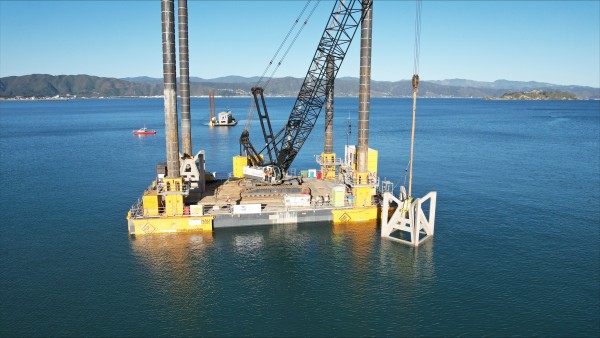
A dedicated precast yard was established in Seaview to manufacture the structures. Each pyramid measures four metres long and wide, five metres high, and weighs approximately 22 tonnes. They were transported to site using BPC’s jack-up barges, Manahau and Kaupapa.
The pyramids were carefully placed on the seabed at depths of seven to ten metres, where they are designed to attract fish and support marine life. Their form encourages the growth of algae, kelp, shellfish, snails and kina, creating a thriving habitat over time.
Within a few years, increased populations of common fish species are expected, along with a diverse mix of plant and invertebrate life across the reef surfaces. These benefits will extend up the food chain, improving food availability for seabirds and other marine species in the area.

BPC employed a ‘bubble curtain’ to protect dolphins and other marine creatures in Wellington harbour during piling operations for the Seaview Energy Resilience Project site.
BPC employed a ‘bubble curtain’ to protect dolphins and other marine creatures in Wellington harbour during piling operations for the Seaview Energy Resilience Project site.
The bubbles act as an acoustic screen, reducing the transmission of underwater noise generated by the piling works and protecting whales and dolphins from distress and hearing damage.
On site monitoring has shown that the use of the bubble curtain reduces the area of influence from piling noise from over 2km down to less than 10m.
Bubble tubing technology creates a vertical wall of fine air bubbles. The bubble curtain is weighted to the seabed and air is pumped through the tube using a compressor. The self-cleaning ability of the tubing means that the installations can be kept in situ and there is no requirement to introduce cleaning products.
BPC employed other environmental protections on the Seaview project, including the use of Marine Mammal Observers to alert site teams when dolphins were spotted nearby. Local Rotary Club volunteers were trained for the roles, with the money they were paid being invested into local community projects.
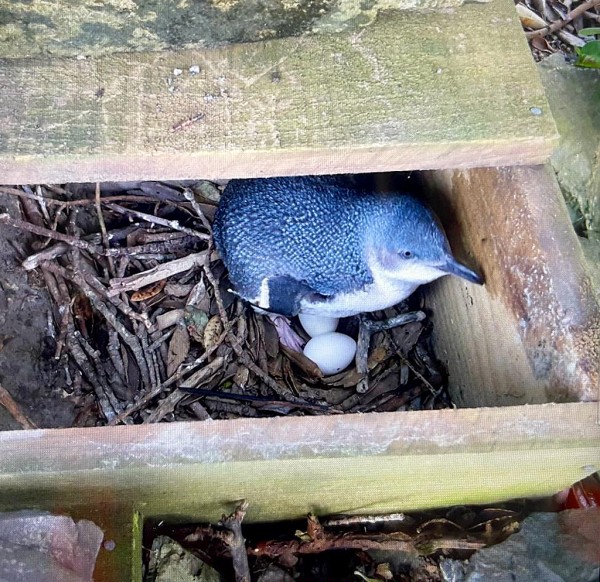
Before site work began on the project, BPC worked in partnership with the Department of Conservation and Greater Wellington Regional Council to re-house penguins and put protections in place to deter them from returning. Everyone was delighted to see penguins nesting in the alternative homes and welcoming new chicks throughout the project.

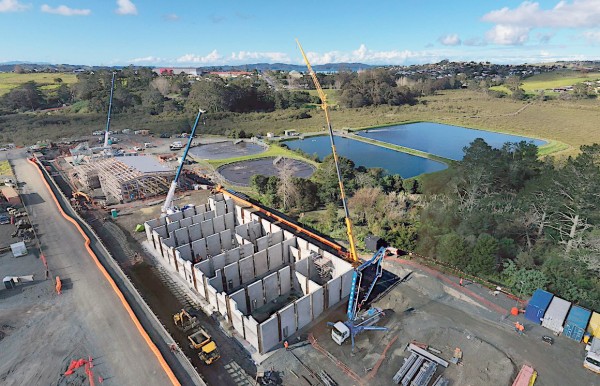
When BPC planned construction of the Snells Beach Wastewater Treatment Plant on a very constrained site north of Auckland, waste reduction and programme savings were achieved through offsite manufactu...
When BPC planned construction of the Snells Beach Wastewater Treatment Plant on a very constrained site north of Auckland, waste reduction and programme savings were achieved through offsite manufacture of the Control Building.
Onsite construction would have taken up valuable space on the tight site, so a range of options were explored. Local supplier A-Line was the only offsite fabricator able to meet the modular requirements, overcoming the challenge of the building size being greater than can be transported by road in a single unit. The design challenges included integrating the Control Building with an adjacent workshop structure and integration into the sitewide fire, security and control systems, and the client’s corporate IT network.
The building uses 1000mm thick cross laminated timber. Twenty metres in length, it is designed with a tolerance of +/-3mm.
The offsite option saved material waste through precision cutting and optimised the use of timber. The factory production was energy efficient and ensured high quality. Transportation emissions were also reduced without having all materials and labour come to site.

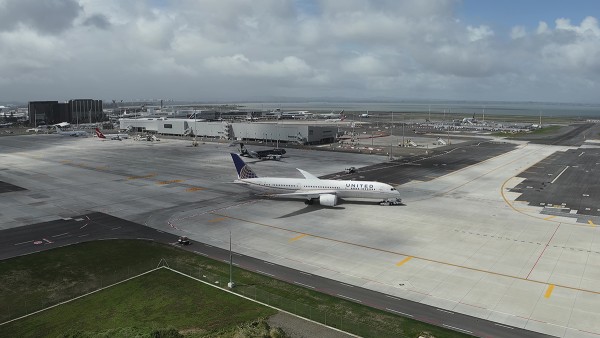
BPC and Auckland Airport conducted an innovative trial, reusing demolished runway concrete as a basecourse material for structural pavements.
BPC and Auckland Airport conducted an innovative trial, reusing demolished runway concrete as a basecourse material for structural pavements. This initiative was the first use in New Zealand of recycled concrete for highly loaded structural airport pavements, setting a benchmark for sustainable infrastructure. It significantly reduced both carbon emissions and costs and showed a better way to build pavements sustainably.
In March 2025 a test section of taxiway was constructed using recycled crushed concrete (RCC) repurposed as cement treated basecourse (CTB). Rigorous field tests showed the recycled material met the Airport’s strict engineering specifications for load-bearing capacity and durability. The pilot section performed equivalently to standard materials, confirming RCC CTB as a viable alternative for heavy-duty airfield pavements.
The RCC-based solution reduced embodied carbon by around 75% compared to the traditional approach and delivered a cost saving of around 31% in pavement construction for the trial area.
Key to the trial’s success was the collaborative effort across multiple organisations. BPC, as head contractor, led the project, working with Urban Quarry (Winstone Aggregates), AECOM, Firth Industries, and Ross Reid Contractors as well as Auckland Airport. The trial marks a shift in how we can approach sustainable construction in our Auckland Airport projects, reducing reliance on new aggregate supply and turning a waste stream into a high-performance product on site.
The trial challenged and changed the stringent specification that traditionally prohibited recycled materials in the airfield pavement. The trial’s success has opened the door for formal specification updates – showing that recycled concrete can meet or even exceed performance of virgin quarried materials in high-load applications.

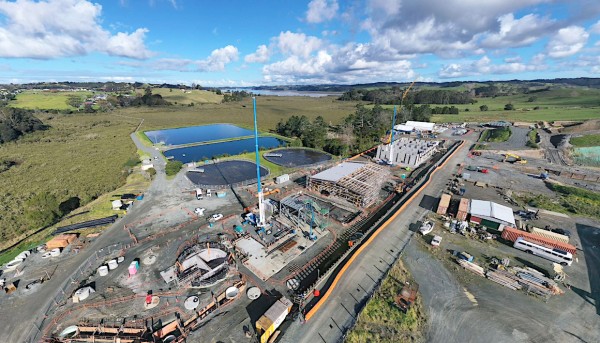
During their ECI input into the design of the Snells Beach Wastewater Treatment Plant project, BPC demonstrated our commitment to sustainability by proposing to eliminate the need for a PE liner on th...
During their ECI input into the design of the Snells Beach Wastewater Treatment Plant project, BPC demonstrated our commitment to sustainability by proposing to eliminate the need for a PE liner on the inlet pump station wet well elements exposed to process flow. These included the floor, walls, and precast lids.
Two main options were reviewed – a concrete admixture and the post pour application of a 25mm thick cement-based coating. The selected approach was the additive Xypex Biosan C500, which works by limiting microbial induced corrosion and improving long-term crack resistance in the concrete. It is added at the concrete batching plant, so the pour is no different to using a typical concrete mix.
Significant cost and time savings were achieved by using Biosan instead of a PE liner. BPC’s team identified and reviewed the additive with the design partner and Watercare, confirming its application through overseas case studies. To make the solution work fully, support from the designer was needed to increase the ventilation rate in the pump station and to confirm their acceptance for structural signoff. The benefit of eliminating the PE line significantly outweighed the design cost to the project.

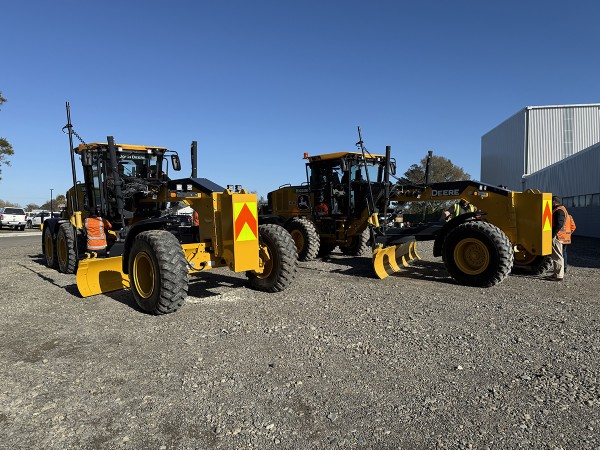
Our Palmerston North depot added two 670G John Deere graders to their fleet.
Our Palmerston North depot added two 670G John Deere graders to their fleet.
With features like automatic gear shifting, self-lubricating systems, and built-in protection against machine damage, these graders make the job easier, safer, and more efficient for operators. They also allow for more precise and consistent grading, which means smoother, longer-lasting roads. Plus, operators can choose between joystick or traditional controls, making the machines more comfortable and adaptable to different working styles.
The graders are also equipped with the latest precision grade control technology from Topcon Positioning Systems, bringing cutting-edge capabilities to our grader teams. This system helps our teams work faster and more accurately. It uses smart tools like total stations, GPS, lasers, and sensors to control the grader blade in real time down to the millimetre. That means smoother surfaces, less rework, and better results on every job.

Higgins’ Kaiwera Downs Wind Farm Stage 2 project team drove sustainability on site by implementing hybrid power solutions.
Higgins’ Kaiwera Downs Wind Farm Stage 2 project team drove sustainability on site by implementing hybrid power solutions.
By integrating solar panels with battery management systems and diesel generators, the team significantly reduced both carbon emissions and reliance on diesel.
Stage 2 formed part of Mercury NZ’s wider Kaiwera Downs Wind Farm development. Stage 1 was completed in November 2023 and included 10 turbines generating 43MW, enough to power around 20,000 homes.
Stage 2 delivered a further 36 Vestas V136-4.3MW turbines, lifting total capacity to 198MW and generating enough renewable electricity to power approximately 93,000 homes each year. The turbines have a hub height of 88 metres and a blade tip height of 150 metres.
The project also included a new 4km transmission line connecting the wind farm to the Transpower network, along with a new substation to support full generation.
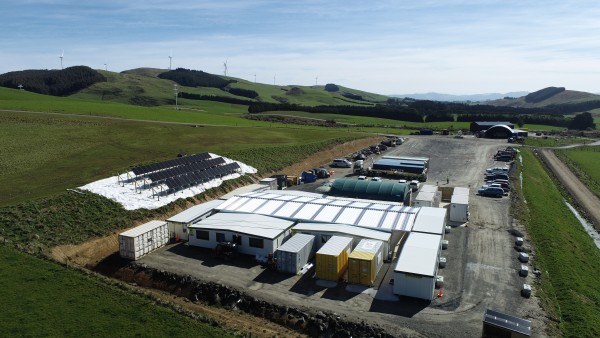

Our Higgins Bay of Plenty team took a break from their busy schedules to contribute to the Thornton Kānuka Restoration Project.
Our Higgins Bay of Plenty team took a break from their busy schedules to contribute to the Thornton Kānuka Restoration Project.
This vital initiative aims to preserve one of New Zealand’s most unique and vulnerable native species. The Thornton kānuka, a tree with twisted trunks shaped by coastal winds, is found only along a 20km stretch of sand dunes near Thornton Beach. Unfortunately, its habitat is under threat from invasive weeds and climate change, making restoration efforts more crucial than ever.
Our team ventured into the dunes and planted over 900 native plants, helping to expand and strengthen the habitat for this rare species. It was a day of connection – with nature, with each other, and with a shared purpose to protect the biodiversity of our region. This effort is part of a broader environmental push supported by the Toi Moana Bay of Plenty Regional Council and Whakatāne District Council, ensuring that future generations can experience the beauty and resilience of our coastal ecosystems.


We offer award-winning bitumen that will make a massive difference to the sustainability of road construction.
We offer award-winning bitumen that will make a massive difference to the sustainability of road construction.
The product is Puma Energy's Carbonbind® bitumen, used to produce emulsion for resealing operations throughout the North Island.
A life cycle assessment (LCA) for the product shows it has 35% less carbon compared to regular bitumen, meaning it'll play a big part in reducing the embodied carbon of pavements in Aotearoa.
The Puma Energy Carbonbind® Environmental Product Declaration (EPD) is available here.
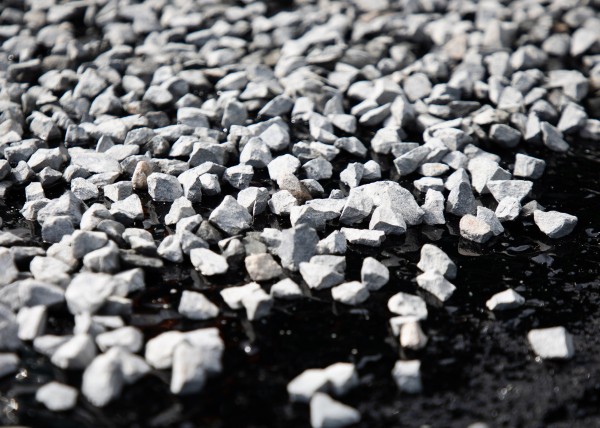

We're building for tomorrow.
We're building for tomorrow. View some of the many ecological aspects of the Eastern Busway project with Environment Lead Jonathan Green as your guide.
We're delivering the Eastern Busway project within an alliance of Auckland Transport, ACCIONA, AECOM and Jacobs in partnership with mana whenua.

New Zealand sends nearly 300,000 tonnes of textile waste to landfill every year.
New Zealand sends nearly 300,000 tonnes of textile waste to landfill every year. We’re proud to be part of the solution through Higgins Auckland’s PPE Recycling Programme in partnership with Cleanline Tasman - Workwear & PPE Specialists.
This initiative is more than just recycling; it’s a commitment to sustainability, innovation, and accountability. The process is simple. The branch orders a PPE recycling box in the size they need from Cleanline Tasman. End-of-life garments are deposited into the box. Accepted items include uniforms, hard hats (shell only), footwear, and gloves. Wet, soiled, or contaminated items are excluded. Once full, the box is returned via courier. Cleanline Tasman then processes the items and provides an Impact Statement showing the contribution made.

Our fleet management is powered by Higgins M5, a cutting-edge, cloud-based platform that provides end-to-end visibility and control.
Our fleet management is powered by Higgins M5, a cutting-edge, cloud-based platform that provides end-to-end visibility and control. The system ensures plant certification and registration, manages asset lifecycles, analyses maintenance costs, monitors fuel usage, tracks driver behaviour, and integrates plant pre-start checks.
Through Higgins M5, we have developed a data-driven CAPEX programme, achieved a 25% reduction in repair and maintenance costs, and gained real-time insights into plant location and status. The platform has also enabled the introduction of targeted safety initiatives, including recognising ‘safe drivers’ through our Driver of the Year competition.
Higgins M5 supports real-time communication and complete visibility of issues, helping to drive a further 20% reduction in overall fleet costs while improving safety outcomes for our drivers and the communities we work in.
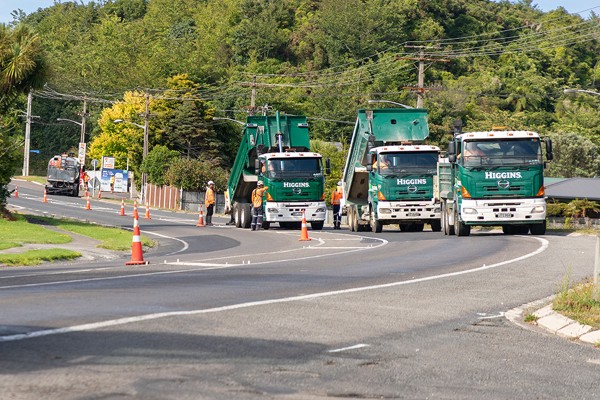

Liveable Streets South Rural, the team from Higgins and HEB who look after the roads in South Rural Auckland for Auckland Transport, is turning waste into opportunity.
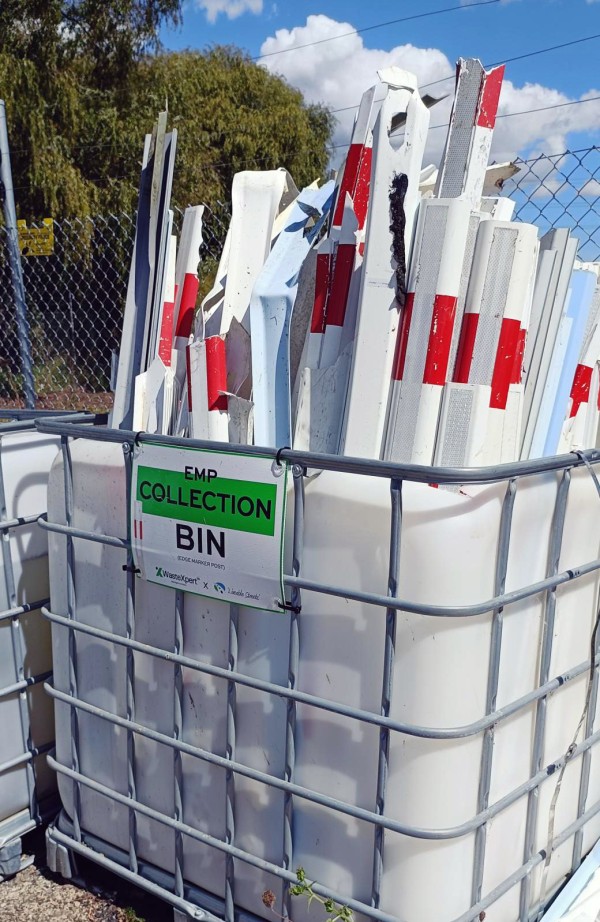
Liveable Streets South Rural, the team from Higgins and HEB who look after the roads in South Rural Auckland for Auckland Transport, is turning waste into opportunity. In 2021, the team faced a challenge with discarded road edge marker posts (EMPs). By 2025, thanks to a partnership with WasteXpert and Plastics Recycling NZ (PRNZ), a joint venture between Waste Management New Zealand and Aliaxis New Zealand, over 1 tonne of EMPs have been diverted from landfill — nearly 100% of what was collected!
The team at Liveable Streets cleaned and sorted the EMPs, in bins provided by WasteXpert. These are then sorted into collection bins. The EMPs were soaked, cleaned, dried, and then transported to PRNZ for recycling. This initiative avoided 143 kg CO₂-e emissions and showcased how innovation can drive real environmental impact. The recycled material is now being repurposed into new products at Aliaxis facilities across New Zealand.
It's a great example of systems that work!

Our Brian Perry Civil team’s not just brought power to the Half Moon Bay ferry terminal – they also used an environment-friendly solution to bring power to their site compound too.
Our Brian Perry Civil team’s not just brought power to the Half Moon Bay ferry terminal – they also used an environment-friendly solution to bring power to their site compound too.
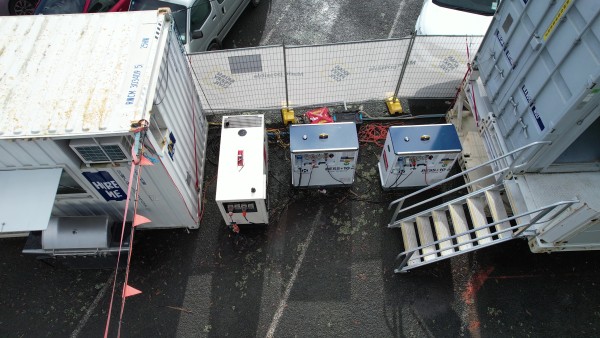
The area they’re based out of didn’t have easy access to mains electricity, so they had to rely on a diesel generator to power their site compound. However, running it 24/7 caused noise and pollution for the nearby residents and school.
To tackle this, the team devised a hybrid power solution using a Battery Energy Storage System (BESS) alongside the diesel generator. The generator mainly ran during the day to charge large battery units, which then provided silent power overnight.
The hybrid solution not only maintained power without noise but also reduced generator usage. This resulted in less wear and tear, lower diesel consumption, fewer emissions, and cost savings. Initially, the team had to fill the generator three times a week. With the solution, they needed to fill it once a week, a third of what was previously used.

The Eastern Busway project team uses thousands of protective caps every year on the sharp edges of posts and fences when cordoning off hazards, to help keep the community and staff safe and prevent in...
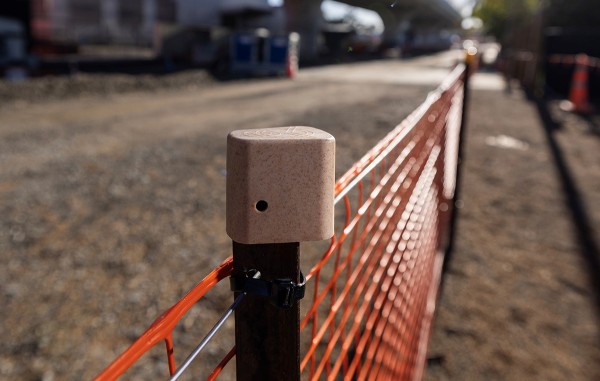
The Eastern Busway project team uses thousands of protective caps every year on the sharp edges of posts and fences when cordoning off hazards, to help keep the community and staff safe and prevent injuries. While considerable effort is made to recycle and re-use the caps, many end up in landfill.
In a first for New Zealand, the project team has partnered with Compostify (Bioplastics) to make caps from a polymer that breaks down naturally in the environment. They are made from non-toxic ingredients, biodegrade over time and are part of our commitment to reduce waste.

We embarked on a significant step toward a more sustainable roading network by expanding the use of recycled asphalt across two plants.
We embarked on a significant step toward a more sustainable roading network by expanding the use of recycled asphalt across two plants. We made modifications at the Hamilton site and Palmerston North plant, allowing both locations to incorporate reclaimed asphalt pavement (RAP) into the mix designs.
Changes to the Hamilton plant included the addition of a new collection bin and conveyor system to manage RAP. The plant’s existing computer systems were already equipped to control the precise amounts of RAP used in each mix.
In Palmerston North, RAP had previously been used but was paused due to demand for other constituents. Upgrades, including a small conveyor and extra bin, made it possible to reintroduce RAP into the mix.

BPC’s Whakawhirinaki Silverstream Pipe Bridge project was celebrated by Water New Zealand for achieving great carbon reduction outcomes.
BPC’s Whakawhirinaki Silverstream Pipe Bridge project was celebrated by Water New Zealand for achieving great carbon reduction outcomes. The project was showcased in WaterNZ’s new Embodied Carbon Guideline for industry as an example of good practice.
Case studies are a great way to encourage action in sustainability and share successes. The 60%+ carbon reduction at Silverstream was a really significant outcome and is very deserving of inclusion in an industry guidance document.
As an Early Contractor Involvement project, BPC worked directly with the designers to make carbon-reducing changes like shifting from a concrete to a steel structure, unlocking reductions in piled foundations and the embedded carbon in the super and substructure.
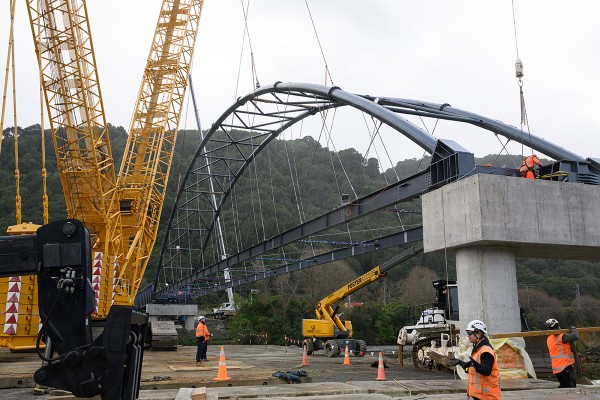
The Silverstream pipe bridge includes a 200m long bridge carrying a seismically resilient concrete-lined steel water pipe and a shared pathway for pedestrians and cyclists. Here’s a link to the WaterNZ guideline Embodied - Carbon in the Water Sector : Water New Zealand.

International construction management software provider Procore shared our story of setting new a new standard in digital transformation.
International construction management software provider Procore shared our story of setting new a new standard in digital transformation.
Our collaboration with Procore has enabled us to streamline our digital tools, making us more efficient in tracking quality, enhancing reporting, and fostering better collaboration with our stakeholders.
We’re proud to have been an early adopters of this world-leading construction management software in New Zealand.
Procore visited one of Brian Perry Civil’s projects to see how we’re using the software. Check out the video – then take a look at the case study here.

Our Waikato teams made significant progress in road maintenance by successfully trialling heavily stabilised pavement at six high-risk sites across the East Waikato state highway network.
Our Waikato teams made significant progress in road maintenance by successfully trialling heavily stabilised pavement at six high-risk sites across the East Waikato state highway network. This initiative was part of the 2024/25 annual rehabilitation programme for the East Waikato Network Outcomes Contract, involving a strong collaborative approach between NZ Transport Agency Waka Kotahi, Beca and Higgins to deliver value for money design and construction outcome.
By incorporating a higher density of cement and lime into the pavement, the road becomes more 'concrete-like,' enhancing its durability, resistance to moisture infiltration in varying climates, and increasing its load-bearing capacity. This in-situ process not only brings cost savings by avoiding the need to replace the entire basecourse but also extends the overall lifespan of the pavements.


BPC's Seaview Wharf project team recognised an opportunity to improve environmental practices by avoiding used safety glasses being sent to landfill.
BPC's Seaview Wharf project team recognised an opportunity to improve environmental practices by avoiding used safety glasses being sent to landfill.
They ensured an average of 70 pairs of glasses recycled each month by working with Terracycle, a company offering a range of recycling options for construction site waste.

Our Higgins Traffic team led a recycling initiative aimed at boosting sustainability and reducing costs.
Our Higgins Traffic team led a recycling initiative aimed at boosting sustainability and reducing costs.
The team, which relies heavily on traffic management, previously faced high expenses for aluminium traffic signs. Old and damaged signs were sent to scrap metal, yielding less than one-eighth of their original cost. They reviewed the process and explored the feasibility of reusing or refurbishing these signs. The findings revealed that recycling the signs was far more cost-effective than purchasing new ones.
This initiative resulted in significant savings for the division. Large signs were converted into multiple smaller ones at half the original cost, reducing expenses and increasing the inventory of usable signs. This recycling effort made their operations more sustainable by reusing materials and cutting down on costs.

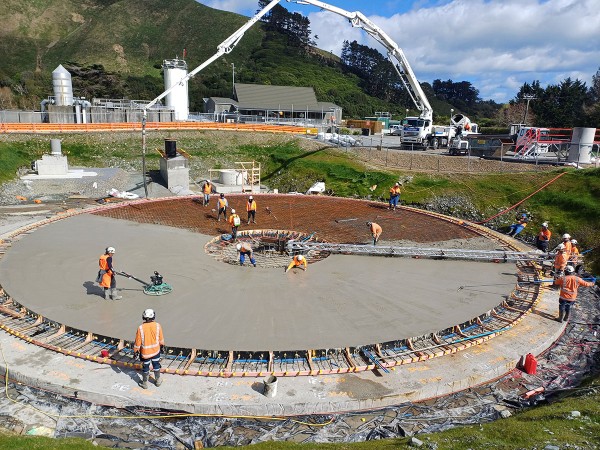
BPC's Waikanae water treatment plant project team enhancied the facility's seismic resilience, including the construction of a water clarifier tank.
BPC's Waikanae water treatment plant project team enhancied the facility's seismic resilience, including the construction of a water clarifier tank.
Faced with the challenge of completing the concrete placement for the massive tank floor to strict level tolerances and the required finish within just six hours, concrete placing companies were hesitant to take on the task.
The team devised an innovative solution by customizing a vibrating screed to fit the size and complexity of their operation. While vibrating screeds are common, their tailored version allowed the BPC site team to self-perform the work seamlessly.
This custom screed not only saved considerable time and labour but also eliminated the need for concrete workers to manually screed while standing in the pour. This approach can be applied to future large-diameter tank base pours.

Innovation and collaboration on Auckland Transport’s Eastern Busway project have enabled the plunged pier reinforcing cages to be constructed on Rā Hihi (flyover) above Reeves Rd.
Innovation and collaboration on Auckland Transport’s Eastern Busway project have enabled the plunged pier reinforcing cages to be constructed on Rā Hihi (flyover) above Reeves Rd.
Construction of each pier required a coordinated and staged construction method. A prefabricated pier reinforcing cage was delivered to site by Fletcher Reinforcing and then lifted, rotated and plunged into a 3m diameter bored concrete pile, constructed by Brian Perry Civil.
Due to the unique shape of the flared piers, a bespoke plunging jig and steel pier form was required and designed by the alliance, then modelled and reviewed by the Fletcher Engineering Services team prior to fabrication. The team used the Tekla Structures Building Information Modelling (BIM) platform to provide an accurate and detailed 3D model of the flared piers.
Given the size and scale of the piers, Fletcher Reinforcing chose to build these at Fletcher Steel’s Hunua site. That gave space and opportunity to focus on building each pier using a purpose-built jig and for tying efficiency to be improved. The on-site steel fixing teams used their iPads to access the 3D model using the cloud-based collaboration platform, Trimble Connect. This ensured the high quality of each flared pier and increased the efficiency of the build.
The first flared pier was delivered in June 2024.


Higgins collaborated with various partners to responsibly manage tyre waste and reduce our environmental footprint.
Higgins collaborated with various partners to responsibly manage tyre waste and reduce our environmental footprint.
Since the maintenance and construction of the Hawke’s Bay State Highway network began in 2021, Higgins Hawke’s Bay NOC and Branch have been collecting abandoned tyres and stockpiling them at their depot. Some of these tyres were repurposed for retaining walls and building loading banks.
They partnered with Waste Management to process the tyres into Tyre Derived Fuel, which was then sent to Golden Bay Cement for use in cement production. Additionally, tyres were sent to Carter’s for retreading to extend their life, while unusable ones were broken down by their pyrolysis plant for manufacturing new tyres.
Through these efforts, Higgins diverted 1,886 used tyres in 2021, saving the equivalent of 61,680 litres of oil, 51,400 litres of natural resources, and reducing CO2e emissions by 38 tonnes. In one financial year, 560 used tyres were diverted for retreading and recycled 508 used tyres, saving 33,600 litres of oil, 28,000 litres of natural resources, and reducing CO2e emissions by 20 tonnes.


Our Specialised Engineering team has achieved outstanding results in bitumen sprayer technology.
Our Specialised Engineering team has achieved outstanding results in bitumen sprayer technology.
An innovative sprayer build for our parent company, Higgins, delivered significant improvements in usability, functionality, and efficiency.
The sprayer features automated bar movements for lap joints, road edges, and kerb and channel applications. It also includes surface texture scanning to enable automated variable application rates, along with fully autonomous self-driving and spraying capability.
This build has been recognised as a major step forward in sprayer technology. It supports targeted reductions in maintenance costs, greater automation, and precise control of spray bar positions and nozzles, resulting in improved accuracy, repeatability, and fewer surfacing defects.
By working closely with current and former operators, the team incorporated valuable feedback into the design. Enhancements include the ability to control individual nozzles or operate spray bars as a group, giving operators the flexibility to spray complex shapes and back-to-back patches of varying sizes in a single pass.
This increased efficiency reduces the number of spray passes, chip truck movements, and lane closures, ultimately lowering the cost of chip sealing and seal repairs.


We're committed to sustainability and reducing our environmental footprint.
We're committed to sustainability and reducing our environmental footprint.
Our road maintenance activities require a significant number of orange road cones to delineate work sites and ensure the safety of our crews. However, these cones have a limited lifespan and contribute to plastic waste when they are no longer fit for purpose.
Our Higgins Waikato team and Fletcher Construction owned signage company, Approach Signs came up with a sustainable cone recycling solution where old cones are collected and re-made into road cones and other products, thereby diverting the old cone from landfill. Road cones are collected in Auckland, Wellington and Christchurch and transported to Auckland where they are ground into small plastic pellets. These pellets are used in the manufacture of the base of the cones Approach Signs sells.
This collaboration not only supports our sustainability goals but also ensures that the replacement cones supplied by Approach Signs contain a portion of recycled materials.


Project site offices have traditionally relied on mains power or diesel generators where mains supply is unavailable.
Project site offices have traditionally relied on mains power or diesel generators where mains supply is unavailable. To reduce environmental impact and operating costs, the Brian Perry Civil team trialled a more sustainable alternative using solar power.
In partnership with Castle Solar Office, BPC introduced solar-powered smoko rooms in areas without access to mains electricity. Each unit was fitted with solar panels capable of generating 2.4 kilowatts of power for immediate use, with excess energy stored in batteries for later. During periods of low sunlight or increased demand, this stored energy provided a reliable backup.
The system proved capable of powering the entire smoko room, including lighting, heating, and cooling, making the setup fully self-sufficient. Alongside reducing carbon emissions, the initiative delivered savings in diesel fuel, labour, and maintenance.
Following its success, the solution was earmarked for rollout across other on-site smoko sheds and stands.

Our research showed that it’s possible to use vegetable oil to reduce the carbon footprint of bitumen.
Our research showed that it’s possible to use vegetable oil to reduce the carbon footprint of bitumen.
Traditionally, roads are built using bitumen which acts as a ‘glue’ holding the road together. Bitumen is by-product of crude oil, so we’ve been looking for a more sustainable option.
Take a look at the video for more details.

Higgins continues to look for ways to reduce environmental impact through practical improvements on-site.
Higgins continues to look for ways to reduce environmental impact through practical improvements on-site. As part of corrosion protection maintenance, one of the bitumen tanks at Napier Port was upgraded and repainted in a darker colour, in line with recommendations from the Energy Efficiency and Conservation Authority (EECA) Energy Transition Accelerator programme.
The tank was finished in “Higgins green”, helping to further improve the energy efficiency of the bitumen plant by reducing heat loss. This simple but effective change supported lower carbon emissions while building on the plant’s existing energy performance.


Higgins explored the wider use of biogenic (plant-based) bitumen for asphalt and chip seal pavements, to help reduce carbon emissions in road construction.
Higgins explored the wider use of biogenic (plant-based) bitumen for asphalt and chip seal pavements, to help reduce carbon emissions in road construction.
By incorporating plant-based components into bitumen binders, the initiative aimed to increase the amount of carbon captured within road surfaces and other asphalt products over time. As these materials are recycled and reused, the approach has the potential to contribute to long-term carbon reduction across the lifecycle of the pavement.
This work represented a promising step towards supporting the Fletcher Construction roadmap target of a 30 percent reduction in carbon emissions, while contributing to a more sustainable future for generations to come.
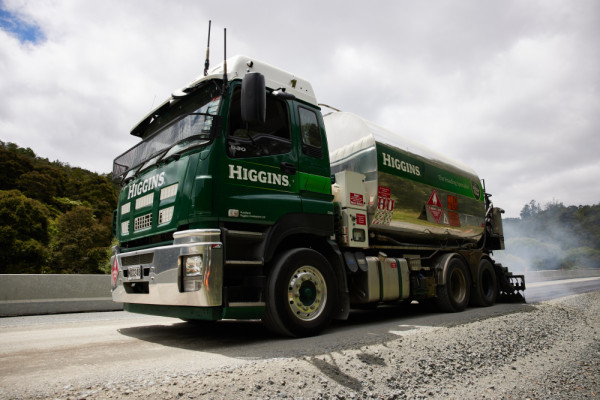

Higgins released an Environmental Product Declaration (EPD) for Higgins’ asphalt products – a first in the New Zealand roading industry.
Higgins released an Environmental Product Declaration (EPD) for Higgins’ asphalt products – a first in the New Zealand roading industry. An EPD tells the environmental story of a product over its life cycle, is science-based and independently verified. The EPD covers 99.5% of Higgins asphalt products produced at their permanent plants in New Zealand, covering the life cycle stages of sourcing and transporting raw materials, product manufacture, and end-of-life options.
To get the EPD, Higgins had to provide energy, waste, water and material data covering production for one year.
The information is increasingly being requested by customers, who need to work out how using the products affects their own impact on the environment. EPDs are an internationally-recognised format that customers know they can trust. It’s also a useful tool for us, as it gives us a baseline to work from as we improve our own environmental performance.
Sitting alongside the EPD, Higgins has a carbon calculator tool to provide customers with a total embodied carbon amount for asphalt mixes covered in the EPD.
Click here to view the EPD.
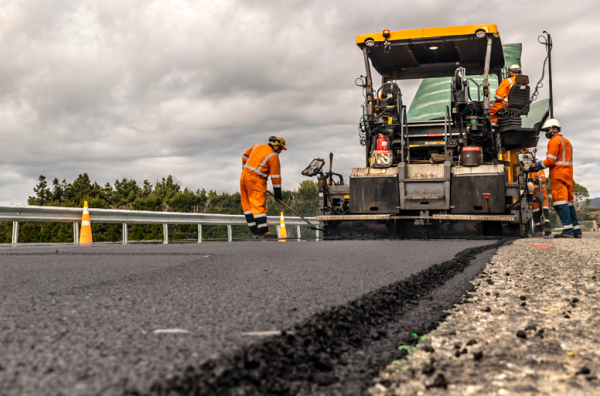

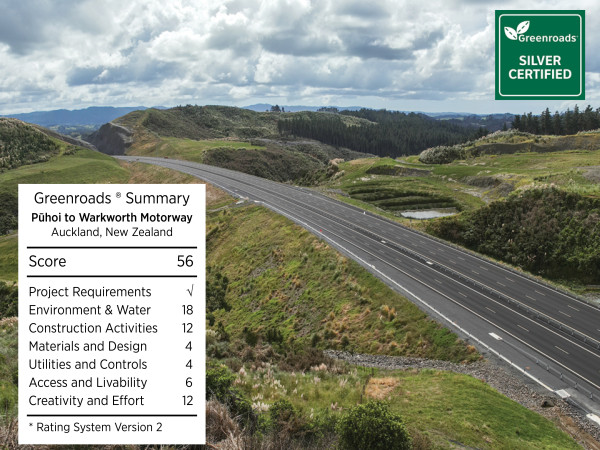
The Ara Tūhono – Pūhoi to Warkworth team earned the highest sustainability rating ever awarded by the Greenroads Sustainable Transport Council.
The Ara Tūhono – Pūhoi to Warkworth team earned the highest sustainability rating ever awarded by the Greenroads Sustainable Transport Council.
It's also only the third Greenroads-certified project outside North America since the programme began in 2010.
Delivered by Fletcher Construction Major Projects alongside Acciona for NX2 and Waka Kotahi NZ Transport Agency, the project worked toward certification since 2016. Following early engagement through the Waka Kotahi International Pilot Program, the team committed to an ambitious Silver rating as part of its sustainability strategy, and now achieves it.
The Greenroads programme recognises sustainable transport development worldwide. In June, the Council’s Governing Board formally awarded the project Greenroads Silver Certification.
Key factors behind the rating include strong environmental protection and enhancement outcomes. These include careful design to minimise impacts on Kauri and native forests, robust sediment and erosion controls to protect the Mahurangi and Pūhoi Rivers, and more than 150 hectares of native revegetation. Threatened flora and fauna were also relocated to suitable habitats.
The project also delivered strong health and safety outcomes, supported by ongoing road safety audits and a design aligned with New Zealand’s KiwiRAP programme.
Additional credits came from innovation, including the use of alternative pavement standards, close collaboration with iwi throughout design and construction, and high performance in environmental and safety management.

When we build new roads, we’re focused on more than just laying some asphalt.
When we build new roads, we’re focused on more than just laying some asphalt. A huge amount of effort goes into protecting and improving the local environment too, and leaving the space in a much better shape for generations to come.
The Ara Tūhono – Puhoi to Warkworth motorway is a great example. It was built by Fletcher Construction and Acciona along with a team of subcontractors for clients NX2 and Waka Kotahi NZ Transport Agency. Along the way, we’ve looked after the surrounding area so it not only looks beautiful, it’s actually improved biodiversity.

When you do 10 million cubic metres of earthworks, you need to be careful about where all that soil ends up.
When you do 10 million cubic metres of earthworks, you need to be careful about where all that soil ends up. That’s the challenge the team working on Ara Tūhono - Puhoi to Warkworth motorway were up against.
Fletcher Construction worked on the project alongside partners Acciona for clients NX2 and Waka Kotahi NZ Transport Agency. With the volume of earthworks they undertook, and the fragility of local waterways, they had to be especially careful to manage erosion and prevent sediment loss.

Motorists travelling the Ara Tūhono - Puhoi to Warkworth motorway will not only enjoy a great piece of infrastructure – they’ll get a glimpse of what it looks like when you plant a million new natives...
Motorists travelling the Ara Tūhono - Puhoi to Warkworth motorway will not only enjoy a great piece of infrastructure – they’ll get a glimpse of what it looks like when you plant a million new natives along an 18km stretch of road.
When we build a major new motorway, it’s no secret that there’s disruption to the local environment. But when our teams constructed Puhoi to WW alongside our partners Acciona, for clients NX2 and Waka Kotahi NZ Transport Agency, a huge amount of work went into developing the area so we’re actually improving local habitats for flora and fauna.

The Ara Tūhono - Puhoi to Warkworth motorway is not just a fantastic piece of roading – it’s been a perfect case study of how we’re using cutting-edge technology at Fletcher Construction.
The Ara Tūhono - Puhoi to Warkworth motorway is not just a fantastic piece of roading – it’s been a perfect case study of how we’re using cutting-edge technology at Fletcher Construction.
When work started on the project for our clients NX2 and Waka Kotahi NZ Transport Agency, we managed to get our hands on the then-relatively new software Propellor.
This allowed our drone pilots to take measurements from the sky, then use them to reliably map, measure, and report on site progress. They’re able to produce a virtual 3D replica of the site, week to week.

The Ara Tūhono - Puhoi to Warkworth motorway winds through some pretty rocky landscape.
The Ara Tūhono - Puhoi to Warkworth motorway winds through some pretty rocky landscape. That’s meant in some areas, the easiest way to build the new road was to use explosives.
The project was built by Fletcher Construction Major Projects and Acciona along with a team of subcontractors for clients NX2 and Waka Kotahi NZ Transport Agency. As a team, we worked with RedBull Powder Company along with Acciona’s International Blasting Specialists to clear a path for the motorway. We filmed the blasting as it happened, which has made for some pretty spectacular footage to look back on!

We used a remote control roller in our work to repair one of the major slips in Coromandel (McBeth-Opoutere).
We used a remote control roller in our work to repair one of the major slips in Coromandel (McBeth-Opoutere). We built a retaining wall to support the road above, backfilled it, and the roller has just finished levelling.
The remote control roller was used in areas where we need to flatten ground near any steep drop-offs. This meant that if something did go wrong and the roller tipped off the edge, none of our people would be hurt in the process.


4D Synchro presentations deliver significant advantages in the Tender and Early Contractor Involvement (ECI) stages of challenging infrastructure projects.
4D Synchro presentations deliver significant advantages in the Tender and Early Contractor Involvement (ECI) stages of challenging infrastructure projects. Hazards can be better foreseen and safety risks reduced.
The increased project visualisation helps discussion and collaboration on complex projects. It really improves project planning and benefits everyone involved.
Our digital engineers use Bentley Systems Synchro 4D software to prepare animations. 4D sequencing of works improves project planning and coordination of ongoing operations. It identifies lead times to optimise construction duration, improves constructability, and greatly improves monitoring of actual progress against planned progress, which reduces claims by more quickly identifying and resolving issues.
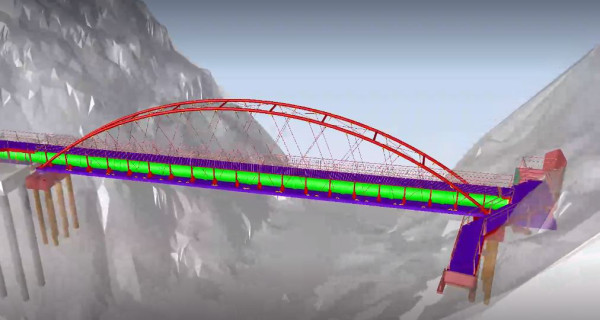

BPC’s South Paray Wharf team in Vanuatu delivered significant environmental benefits by reusing large amounts of concrete and steel waste.
BPC’s South Paray Wharf team in Vanuatu delivered significant environmental benefits by reusing large amounts of concrete and steel waste.
With a previous project on the site abandoned, 500 tonnes of unused steel remained. The team adapted the temporary works design to incorporate this material, using it to fabricate staging crossheads and beams on site. This avoided the need to ship around 250 tonnes of structural steel to Vanuatu and provided an opportunity to upskill local people in fabricating heavy temporary works.
With no local concrete recycling facility available, the team deconstructed the existing wharf and repurposed the reinforced concrete components. These were used in both onsite temporary works and offsite applications. They also partnered with a local enterprise establishing a concrete plant, enabling them to reuse nearly 600 tonnes of precast elements salvaged from the wharf to create the split-level site required.
Around 400 tonnes of concrete were already reused in temporary works and were reused again by the concrete plant, extending the life of these materials even further.

An initiative by BPC’s Snells Beach drainage team delivered stronger skills, lower costs, and improved environmental outcomes.
An initiative by BPC’s Snells Beach drainage team delivered stronger skills, lower costs, and improved environmental outcomes.
The move to PKS pipes was driven by a goal to reduce the team’s carbon footprint. PKS pipes were still made from polyethylene, but their hollow-wall construction made them lighter and easier to handle. Each line was set at a fixed distance from the centre of each manhole, so no pipe cutting was required on site. Everything was done at manufacture.
To build capability within the team, members were trained by manufacturer Hynds to weld the pipes themselves. This reduced the need for external subcontractors and helped cut costs.
Training took five hours with four of the team, who all passed with flying colours. The group demonstrated a strong ‘can-do’ attitude and a willingness to take on new challenges.
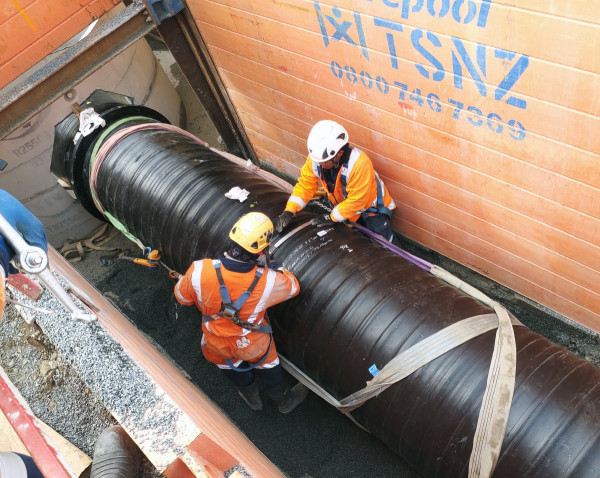

When houses were removed to make way for major infrastructure projects, they were usually sent to landfill.
When houses were removed to make way for major infrastructure projects, they were usually sent to landfill. Carpet, floorboards, plants and corrugated iron all ended up in the same place.
The Eastern Busway Alliance, formed by Auckland Transport with Fletcher Construction, ACCIONA, AECOM and Jacobs, recognised there was a much better approach to demolition.
About 100 houses were relocated, deconstructed or demolished to create space for the Eastern Busway project, improving transport links for the people of East Auckland. The alliance was determined to divert as much material as possible from landfill. Their targets included relocating 5% of houses, diverting 80% of materials from landfill, and reusing 3% of material.
Native timber flooring, joists, carpet and underlay were reused. Other housing materials were sent to Onehunga Community Recycling Centre and to Ara Skills, where they were used by students learning carpentry skills.
Members of the local community also requested materials from the houses being removed, and the alliance provided these where possible. This created a positive, meaningful way to support the community.


An office veggie garden started as a creative solution to hide water downpipes, but it also helped feed the wider community.
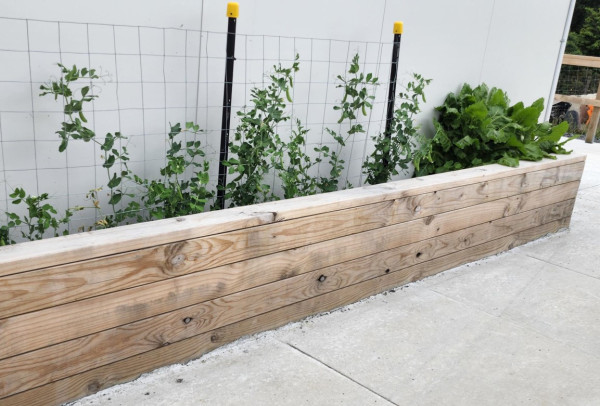
An office veggie garden started as a creative solution to hide water downpipes, but it also helped feed the wider community.
Our BPC team at the Snells Beach wastewater treatment plant came together to plant vegetable patches alongside their small site office.
It was a nice way to make the sub-floor pipework attached to the office less visible.
They could have planted anything, but chose a vegetable garden so they could feed their families too.
The garden bed soon became a thriving space, producing cabbages, broccoli and spinach.
The team focused on higher-yielding crops such as tomatoes and snow peas, allowing more to be shared.
Staff regularly picked from the patch for workday snacks and took produce home to their families.
Any surplus was delivered to the local Snells Beach community share cupboard at the library.
The garden was maintained with pride by the office team of five, who took turns watering it. Along the way, some team members learned more about growing their own vegetables and were inspired to start gardens at home.
It was widely appreciated by those on site.

A few years ago, hybrids were a tough sell across the construction sector.
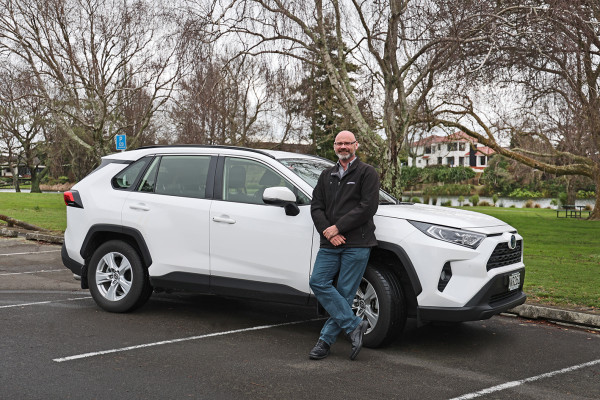
A few years ago, hybrids were a tough sell across the construction sector. That quickly changed to the point where we could not order them fast enough.
Higgins smashed through annual targets for replacing fully petrol and diesel cars, working toward the goal of having 100% of light fleet hybrid or electric by 2026. The only thing that held progress back was delays in getting vehicles into the country. Achieving these hybrid targets formed part of our broader aim to reduce carbon emissions by 30% by 2030.
The transition to hybrid vehicles showed that performance and capability remained consistent with traditional diesel models. There was no loss in functionality, although it took some time to adjust to the quieter motors, which occasionally led to vehicles being left running unintentionally.
Over time, the stigma around hybrid options shifted significantly, with wider acceptance across the sector.

Fifteen students aged 5–14 teamed up with our project crew, bringing a creative and fun twist to bat roosts for the native long-tailed bats living near Ara Tūhono – the Pūhoi to Warkworth motorway.
Fifteen students aged 5–14 teamed up with our project crew, bringing a creative and fun twist to bat roosts for the native long-tailed bats living near Ara Tūhono – the Pūhoi to Warkworth motorway.
The activity was part of our environmental team’s ongoing work to minimise the project’s impact during construction. A key focus has been protecting local bat populations and making sure they have safe, warm places to roost during the day.
The students brought incredible imagination to the task, transforming pre-made roosting boxes with artwork ranging from Māori-inspired designs to bold ‘party-riffic’ creations.


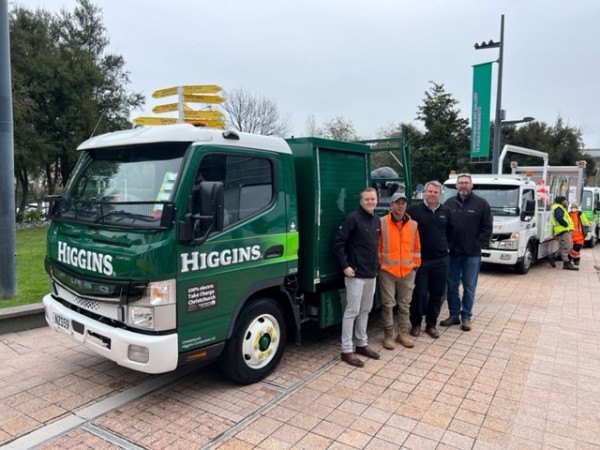
Higgins Christchurch rolled out their FUSO eCanter electric truck as part of the City Council initiative to reduce greenhouse gas emissions.
Higgins Christchurch rolled out their FUSO eCanter electric truck as part of the City Council initiative to reduce greenhouse gas emissions.
With transport making up the majority of the district’s emissions, it was critical to find a path towards zero-exhaust emission trucks, alongside battery electric passenger cars.
It was a privilege to learn from this initiative and share it with other companies, while also playing a part alongside partners TR and FUSO Trucks.

An environmentally friendly cardboard guide wall pilot proved successful at BPC’s Taranaki Street Pump Station project in central Wellington.
An environmentally friendly cardboard guide wall pilot proved successful at BPC’s Taranaki Street Pump Station project in central Wellington.
The project required piles to be installed to a depth of 17 metres below ground, so a guide wall was used to provide the interlocked structure.
Polystyrene former blocks would typically have been used, but a more sustainable alternative was developed by using large cardboard tubes, traditionally used for casting above-ground piles.
This was believed to be the first time these Sonoco tubes had been used for guide walls. They were more challenging to manage than polystyrene, but ultimately proved worthwhile. The result was excellent, providing an environmentally friendly and cost effective option that could be applied on other projects.


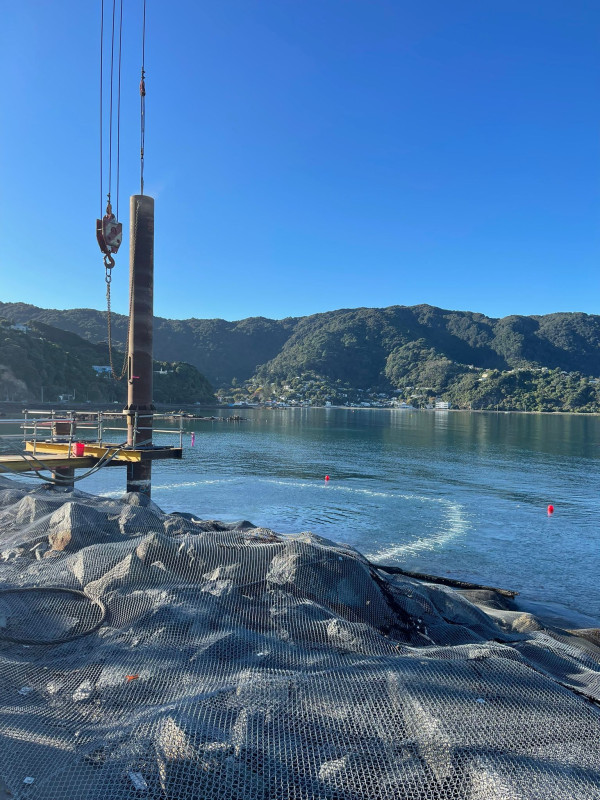
A ‘bubble curtain’ was used by Brian Perry Civil to protect marine life around the Seaview Energy Resilience Project delivered for CentrePort Ltd.
A ‘bubble curtain’ was used by Brian Perry Civil to protect marine life around the Seaview Energy Resilience Project delivered for CentrePort Ltd.
With environmental protection always a priority for BPC’s teams, the bubble curtain provided a way of using technology to maximise protection for marine life in Wellington Harbour.
The bubbles acted as an acoustic screen, reducing the transmission of underwater noise generated by the piling works and protecting whales and dolphins from distress and hearing damage. On-site monitoring showed that the use of the bubble curtain reduced the area of influence from piling noise from over 2km to less than 10m.

We embedded special sensors as we poured concrete at Auckland Airport, saving time and providing greater certainty about the quality of the product.
We embedded special sensors as we poured concrete at Auckland Airport, saving time and providing greater certainty about the quality of the product. Check out the video for more detail on another strong approach from our Engineering Services team.

We’re doing some incredible things with our digital engineering tools.
We’re doing some incredible things with our digital engineering tools. But how do we prove their value?
We’ve made a major investment in digital engineering at Fletcher Construction, and we’re already seeing the benefits for both our people and our customers. The challenge is making that value visible.
To explore this, we hosted a panel discussion at our Penrose HQ. Beca’s Glenn Jowett, Auckland Airport’s Karl Fitzpatrick and our own Matt Findlay shared perspectives on how to measure digital engineering value across clients, consultants and contractors.
The session, delivered in partnership with AUT sparked some great insights and thoughtful discussion from the audience.
What's next for you?
Join us and we’ll get you all set for what’s next – from the career you want to the lifestyle you’re dreaming of. The size and scale of our operations means we can offer an impressive range of opportunities across the country.